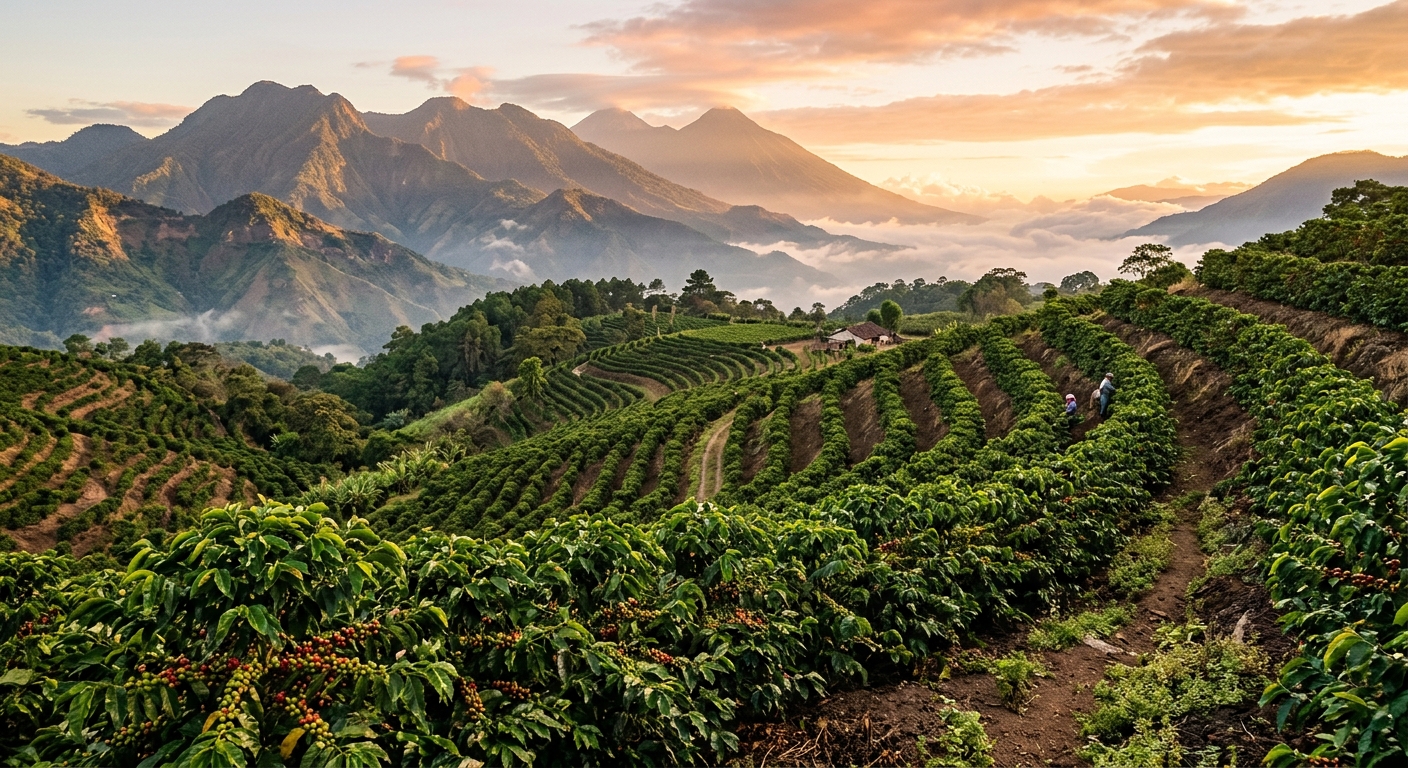
In a valley ringed by three volcanoes, Jamie cups through a dozen washed lots and learns why altitude, shade, and volcanic soil conspire to make Guatemalan Antigua one of the most consistent origins on earth.
Antigua sits in a valley at 1,500 meters, surrounded by three volcanoes: Agua, Acatenango, and Fuego. Fuego still erupts — a thin column of smoke drifts from its cone most mornings, a reminder that the soil beneath every coffee plant here is volcanic, mineral-rich, and still warm in some deep sense that the farmers feel even if they've stopped consciously noticing it.
I've been here three times now. Every time, I arrive for the dry season, when the harvest is winding down and the mills are running full days and into the evenings, and the air smells of fermenting coffee pulp and wood smoke and the particular green-sweet scent of shade trees.
Why Antigua
There are coffees from other Guatemalan regions that score higher in competitions — Huehuetenango gets more attention in specialty circles. But Antigua's consistency is something I've come to value more than headline scores. The volcanic soil and the protected microclimate of the valley produce a cup that is, year after year, reliably excellent: medium body, clear acidity, brown sugar sweetness, sometimes a chocolate note that isn't bitter but almost caramel.
It is the kind of coffee that works. That works at 6am and again after lunch and again when you're pulling shots for a late dinner. That works as a pourover and probably works as a cold brew and would probably survive being made in a bad hotel coffee maker and still taste better than most alternatives.
Reliability in coffee is underrated.
The Farms
Our producer is a third-generation farmer named Carlos whose grandfather planted the first trees on this particular hillside in 1962. The farm sits at 1,650 meters — higher than most Antigua farms, and that extra 150 meters matters. The cherries ripen two weeks later than the valley floor and arrive with more sugar and more structural acidity than the lower lots.
Carlos uses a shade canopy of Gravilea trees — nitrogen-fixing, planted in the rows between coffee — and manages his farm without synthetic fertilizer. "My grandfather didn't use it. The soil was good then and it's good now." I have no reason to doubt him.
The Mill
The wet mill is a small operation on the lower edge of the farm. Cherries come in, are floated to remove defects, pulped the same day, and fermented underwater in concrete tanks for 30 to 36 hours depending on the ambient temperature. After fermentation, the parchment is washed in channels of clean water, then dried on raised beds for 12 to 15 days.
The washed process produces a cleaner cup than natural processing — less fruit-forwardness, more clarity. You taste the terroir more directly. You taste the soil and the altitude and the variety. For Antigua, that's exactly the point.
Our Guatemala Antigua is a medium roast taken to full development without going dark. The brown sugar sweetness survives the roast; the brightness holds. It is a coffee for all the mornings you've ever had — and all the ones you haven't yet.
From this origin
Try this coffee →
This bean is in our current rotation, roasted to order and shipped within 48 hours.
More Origin Stories
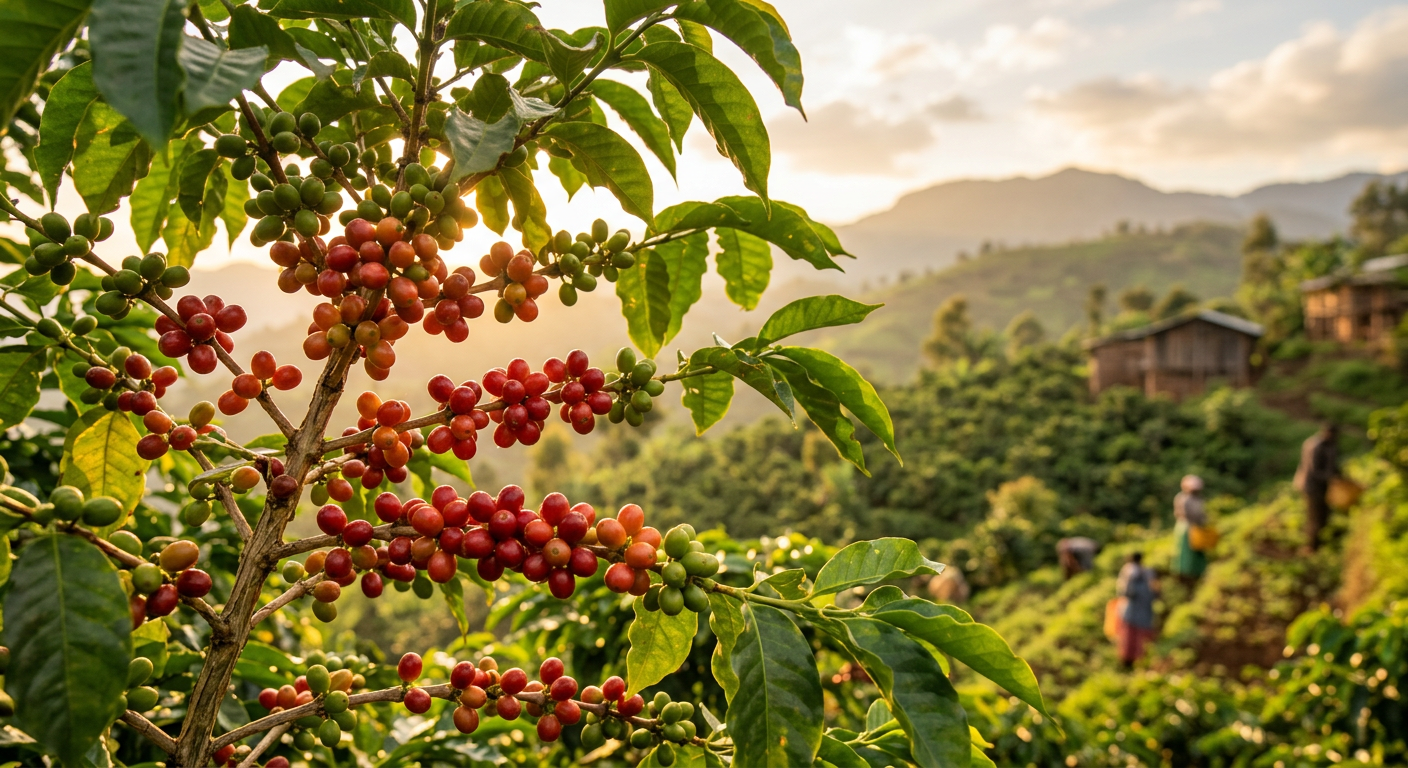
Finding the Yirgacheffe
Jamie travels to the birthplace of coffee — the misty highlands of Ethiopia's Gedeo Zone — and discovers why one small co-op's natural-process cherries taste like blueberry jam and jasmine.
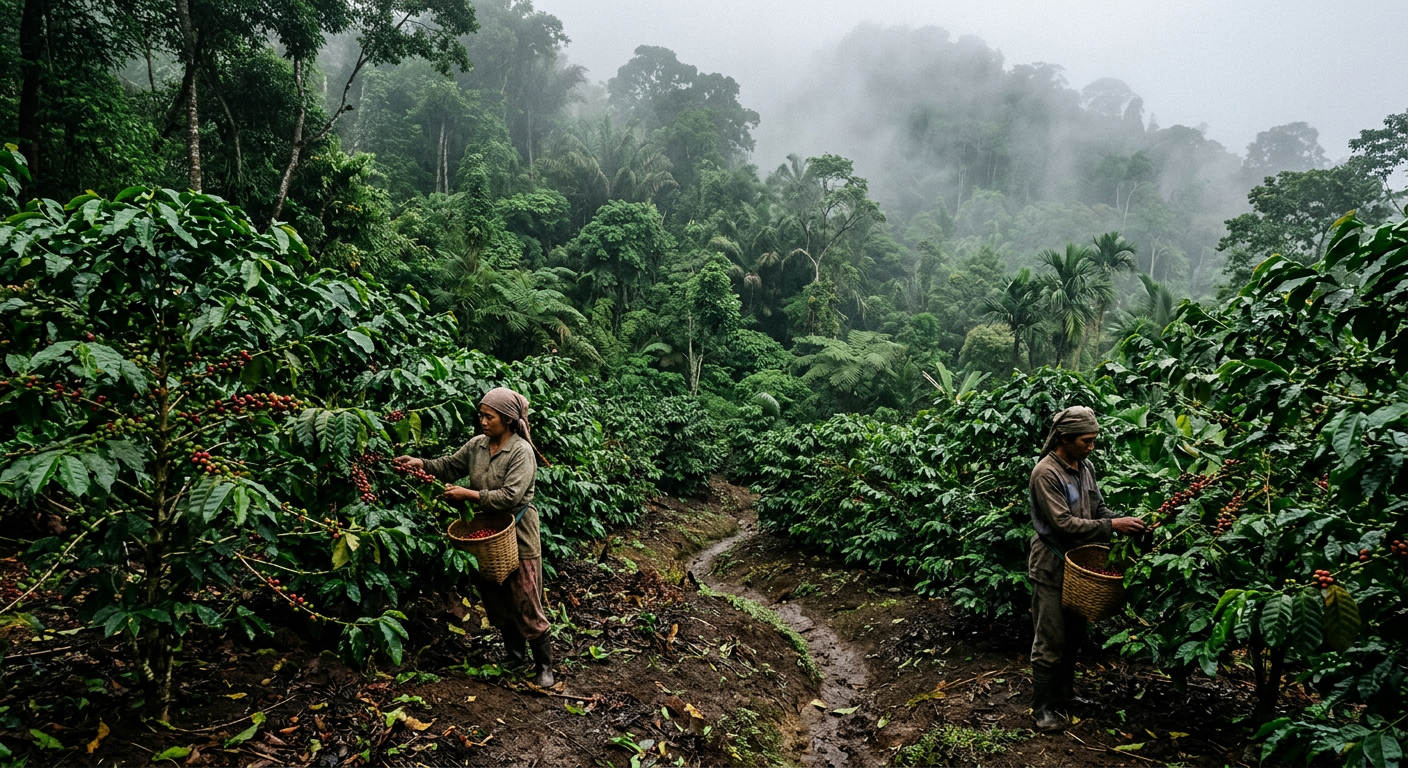
Sumatra: The Fog and the Fruit
Deep in North Sumatra's Mandheling highlands, Jamie traces a coffee through its most unusual processing method — wet-hulled, fog-dried — and learns why this origin demands you abandon your usual tasting frameworks.