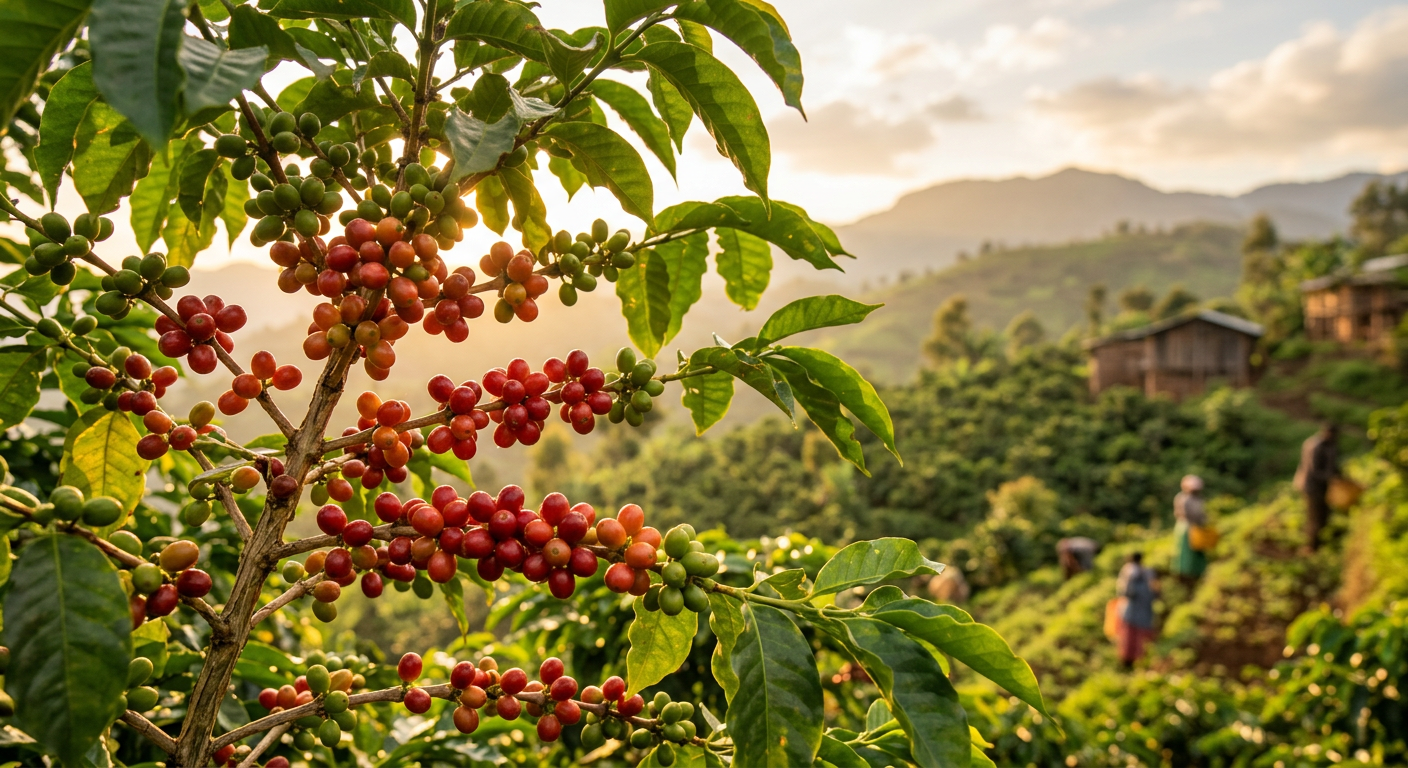
Jamie travels to the birthplace of coffee — the misty highlands of Ethiopia's Gedeo Zone — and discovers why one small co-op's natural-process cherries taste like blueberry jam and jasmine.
The plane descends through cloud into Addis Ababa just before dawn. By the time I've cleared customs and found my driver — a soft-spoken man named Biruk who holds a handwritten card that reads NORTHWIND COFFEE — the sky over the city has turned the color of a ripe coffee cherry: deep red at the horizon, orange above it, then the dark blue-grey of fading night.
We have six hours of road ahead of us.
The Gedeo Zone
Yirgacheffe sits in Ethiopia's Gedeo Zone, a patchwork of small farms tucked into the highlands south of Addis. Altitude here ranges from 1,700 to 2,200 meters — high enough that the coffee cherries ripen slowly, concentrating sugars and complexity in ways that lower-altitude origins simply cannot replicate. The trees are mostly Heirloom varieties: the same wild coffee plants that have grown here for centuries, never selected or bred for yield, just surviving and thriving in the forest understory.
Coffee is indigenous here. The trees are not planted in rows — they grow in the gaps between other crops, shaded by ensete and banana leaves, fertilized by the same soil that has supported agriculture for thousands of years without synthetic inputs.
The Washing Station
I'm visiting a smallholder co-op near the town of Gedeb. The washing station processes cherries from approximately 450 family farms, most of which are between one and three hectares. The average farmer delivers about 200 kilograms of cherry per season — a number that sounds modest until you understand that each cherry is picked by hand, individually assessed for ripeness.
The station manager, Tigist, walks me through the raised drying beds where this season's natural-process coffees are spread thin and turned hourly. Natural process means the cherry is dried whole — fruit and all — before milling. The sugars from the fruit ferment slowly into the seed over three to four weeks, producing the flavors that have made Yirgacheffe naturals famous: blueberry, tropical fruit, floral notes that verge on jasmine or violet.
"We turn them every hour for the first ten days," Tigist tells me through Biruk's translation. "If you don't turn them, the outside dries and the inside ferments unevenly. The cup tastes wrong."
It is painstaking work. It is exactly right.
The Cup
That evening, Tigist's team sets up a cupping table in the station's small office. Seven coffees, seven sets of bowls. We break the crusts, slurp, spit, take notes.
The one I'm here to buy — lot number seven, late-harvest naturals from the highest farms in the cooperative — smells of blueberry jam before I've even broken the crust. It tastes like what happens when fruit and floral notes and brightness and sweetness all agree to inhabit the same cup at the same time. There is nothing aggressive about it. It is generous coffee, made by people who understand what patience produces.
I write a number on a slip of paper and slide it across the table. Tigist reads it, considers it, writes a number back. We go twice more. We shake hands.
The Yirgacheffe you'll find in the Northwind rotation was grown between 1,850 and 2,100 meters, processed naturally over 28 days on raised beds, and milled to a moisture content of 10.8%. It's a light roast — we take it just past first crack, not a second further. The blueberry and jasmine are still there. They were always going to be there. We just tried not to ruin them.
From this origin
Try this coffee →
This bean is in our current rotation, roasted to order and shipped within 48 hours.
More Origin Stories
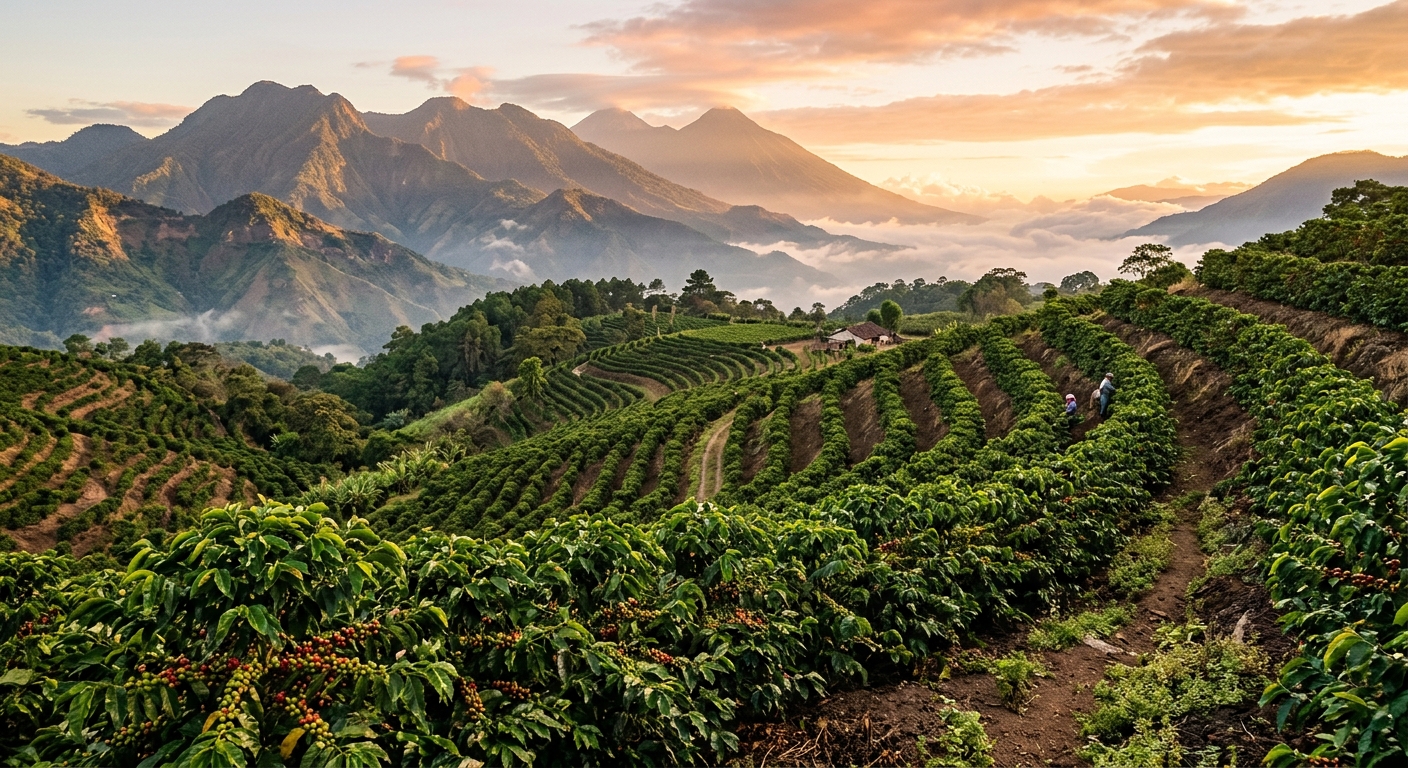
Antigua at 5,000 Feetsss
In a valley ringed by three volcanoes, Jamie cups through a dozen washed lots and learns why altitude, shade, and volcanic soil conspire to make Guatemalan Antigua one of the most consistent origins on earth.
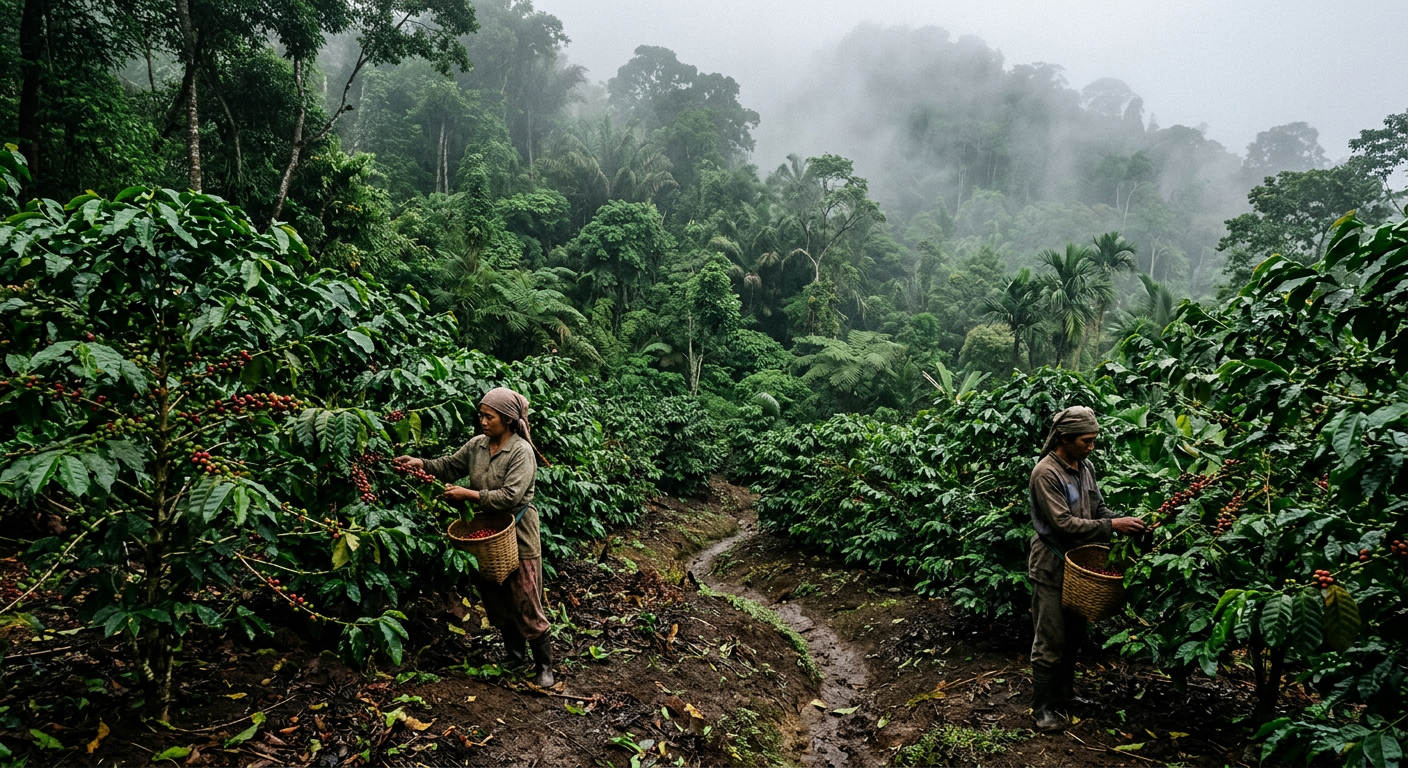
Sumatra: The Fog and the Fruit
Deep in North Sumatra's Mandheling highlands, Jamie traces a coffee through its most unusual processing method — wet-hulled, fog-dried — and learns why this origin demands you abandon your usual tasting frameworks.